Research
Research in the Earth system sciences (ESS) spans a wide range of topics, from understanding how pollutants move in the atmosphere to examining how solar flares affect Earth’s upper atmosphere. Some of the exciting areas of research in ESS include investigating: long-term weather patterns on Earth; severe weather events like large hail, hurricanes, tornadoes, and floods; and the chemical composition of the atmosphere.
NSF SOARS Proteges work with mentors from across the University Corporation for Atmospheric Research (UCAR) ecosystem to conduct an authentic research project connected to ongoing scientific work. During their time in NSF SOARS, Proteges engage in the research process and the UCAR ecosystem, attending seminars, reading scientific publications, analyzing data, and more.
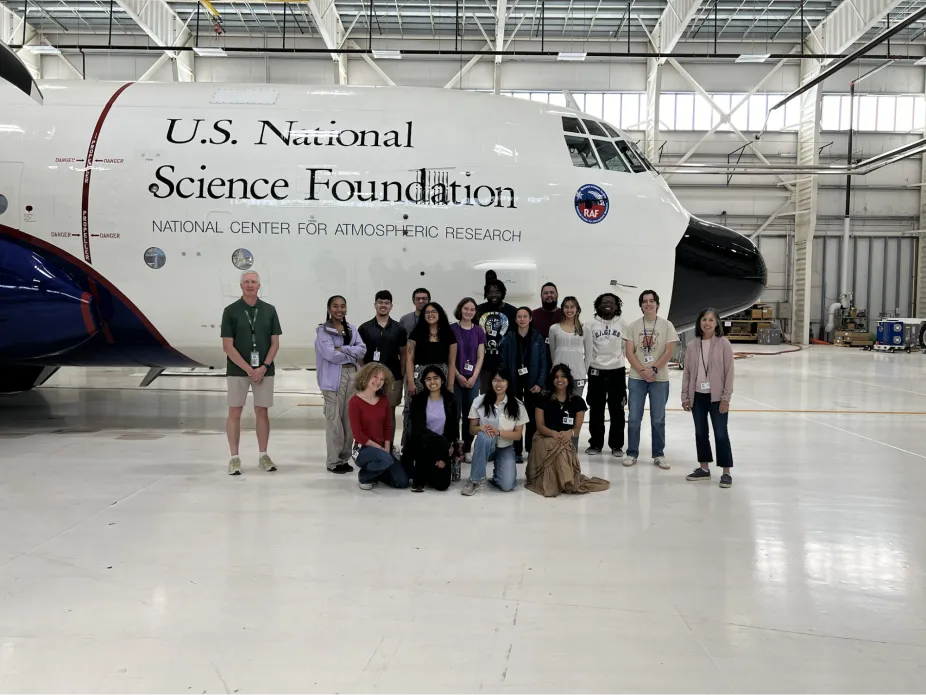
Proteges visiting the Research Aviation Facility standing in front of the NSF NCAR C130.
UCAR manages the U.S. National Science Foundation National Center for Atmospheric Research (NSF NCAR), a Federally Funded Research and Development Center devoted to service, research, and education in the ESS. NSF NCAR's eight labs and programs investigate a breadth of research topics, from the Sun’s effects on Earth's atmosphere to the role of the ocean in weather and climate prediction, as well as support and train the next generation of ESS scientists. Beyond managing NSF NCAR, UCAR hosts a broader suite of programs through its Community Programs division (UCP). UCP's seven distinct programs address diverse research, operational, and educational needs. Their work includes providing classroom-ready science activities for educators, delivering real-time weather data, training land managers in wildfire behavior, and supporting early-career scientists. These programs help make scientific knowledge, tools, and resources available to a variety of audiences and partners.
One of UCP's seven programs is the UCAR Center for Science Education, which runs NSF SOARS. NSF SOARS pairs Proteges mostly with NSF NCAR and UCP mentors to work directly on real research projects those mentors are pursuing.
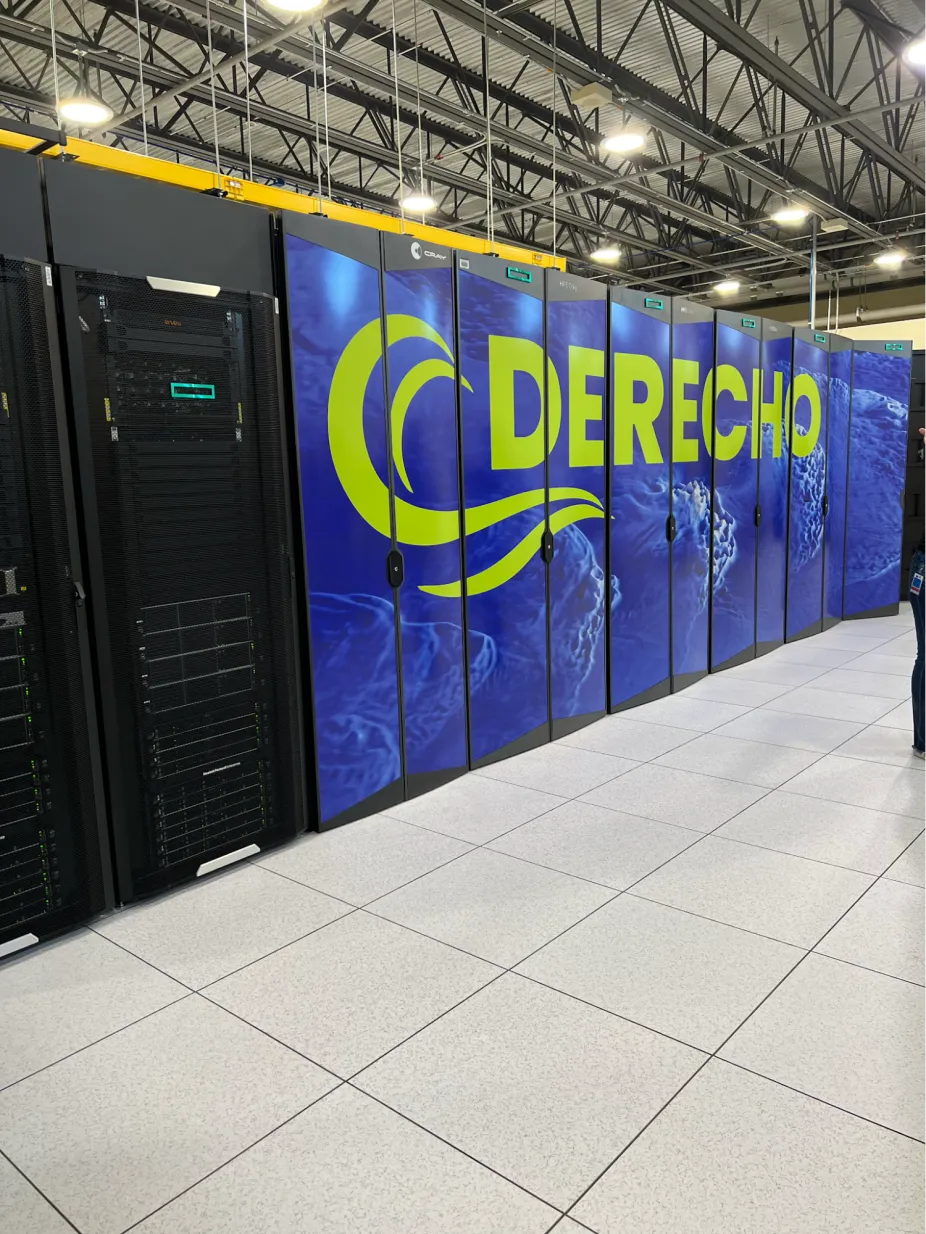
The NSF NCAR Derecho Supercomputer at the NSF NCAR Wyoming Supercomputing Center.
Beyond its main campus buildings, NSF NCAR operates three major facilities: the Marshall Field Site, the NSF NCAR Wyoming Supercomputing Center, and the Research Aviation Facility. Together, these facilities provide specialized capabilities for atmospheric and space physics communities. Resources include surface meteorological instruments, flux measurement systems, atmospheric composition samplers, vertical profiling systems, ground-based and airborne remote sensors, research aircraft, high-performance computing, solar telescopes, and satellite instruments. Each summer, Proteges visit one or more of these facilities to learn more about the research conducted there, and some participate in field campaigns to help collect observations that support their summer research.
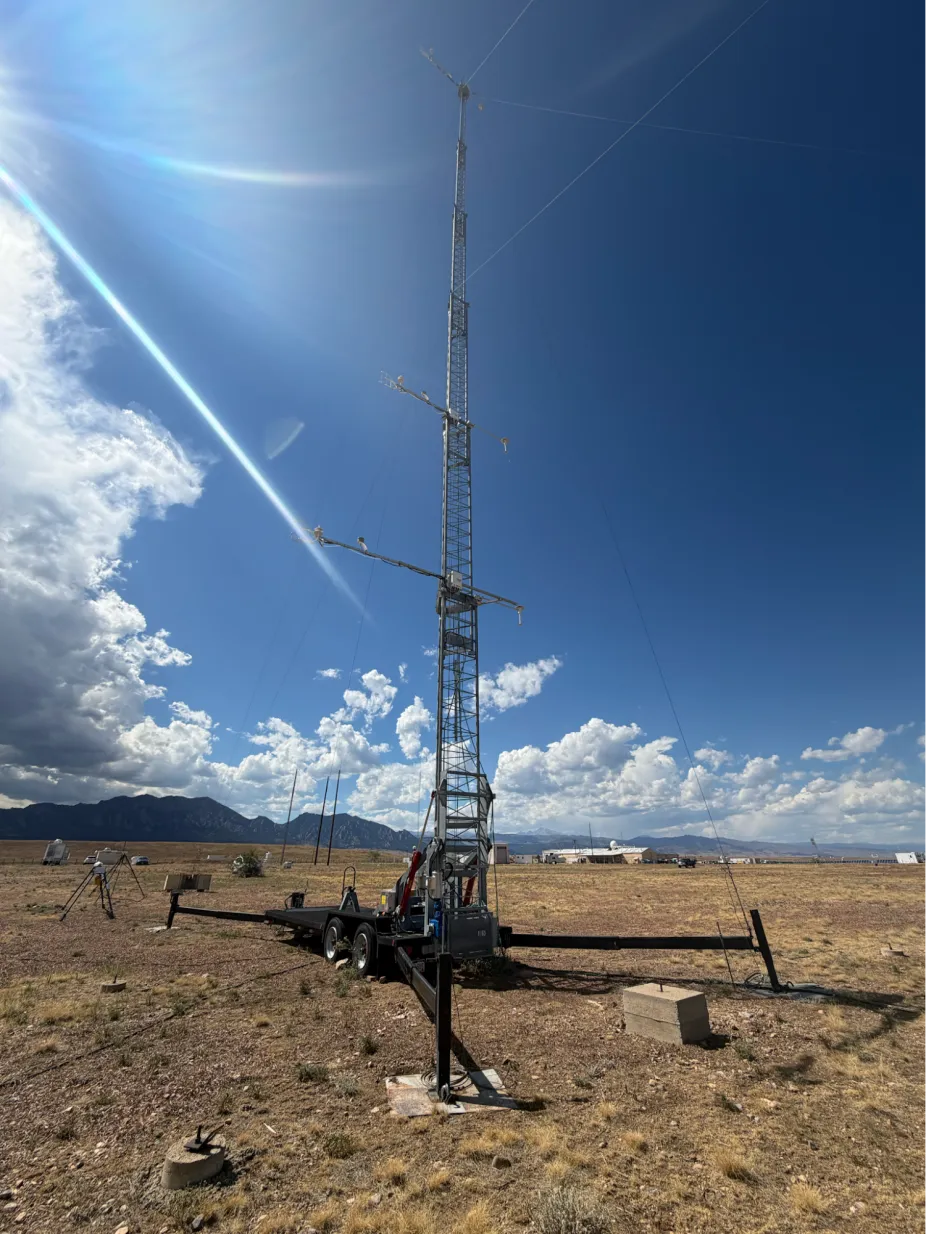
A weather tower at the NSF NCAR Marshall Field Site
NSF SOARS also provides Proteges opportunities to work outside of NSF NCAR and UCP through external internships known as "special projects." These opportunities range from working with scientists at the Woods Hole Oceanographic Institution (WHOI) or the U.S. Department of Agriculture (USDA) Forest Service to collaborating with private industry. Special projects broaden Proteges’ research experience beyond a lab setting and allow them to apply their skills in the field, work with new research teams, and learn how scientific findings inform practical applications. To learn more about hosting one of these projects, visit our Partner with Us page.
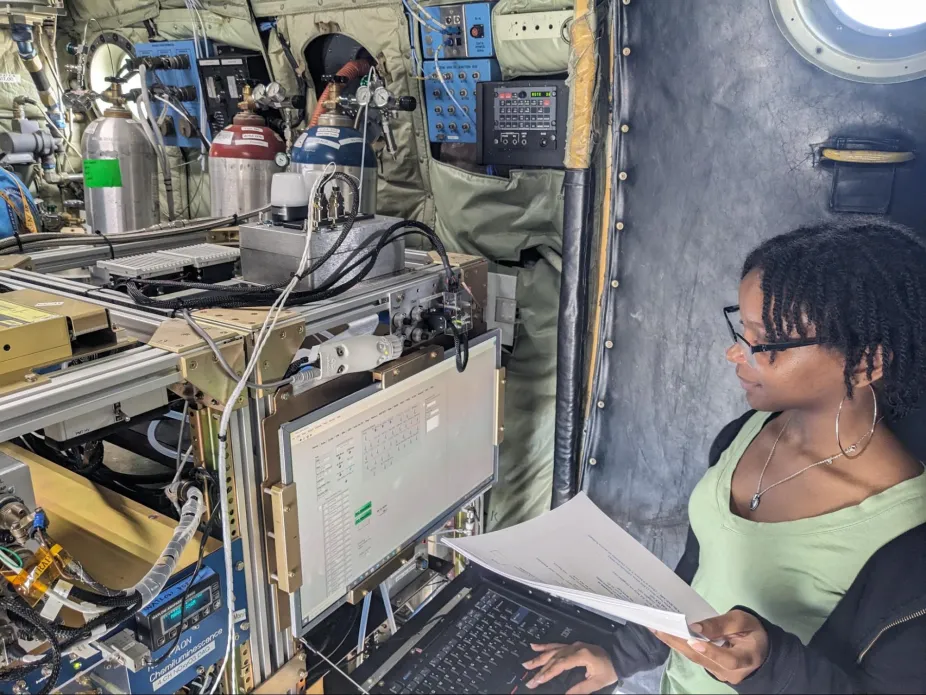
NSF SOARS Protege, Mia Robinson, setting up instrumentation on the NSF NCAR C130 ahead of the GOTHAAM campaign.
Protege research projects reflect the breadth of ESS. Recent project titles include:
- Investigating Submarine Groundwater Discharge and Reef Water Temperatures in West Hawaiʻi
- Exploring the Potential of Low-Cost Air Quality Sensors and Comparing HRRR Forecast vs Analysis Inputs in a High-Resolution Model for Prescribed Burn Applications
- Investigating Non-Propagating Waves in the Outflow Layer of Tropical Cyclones
- Optimizing Preconditioning Length for the TIEGCM to Improve Geomagnetic Storm Prediction Accuracy
- Evaluating the Efficacy of Airborne Radio Occultation Observations on Improving West Coast Precipitation Forecasts
At the end of the 11-week program, all Proteges are expected to complete three major deliverables based on their research projects:
- a manuscript or other approved writing component,
- a 15-minute oral presentation,
- a poster presentation.
These deliverables help Proteges develop and demonstrate their scientific understanding, research skills, and ability to communicate findings in three distinct formats. Explore more Protege projects by viewing our Proteges manuscripts. Learn more about the impact NSF SOARS has made in the ESS community on our statistics page.