Mentoring
We offer each Protege up to five mentors in research, writing, computing, community, and peer support, an approach that has been key to Protege success. NSF SOARS practices holistic mentoring in which everyone has opportunities to learn from one another: Proteges learn from mentors, mentors learn from Proteges, and mentors learn from each other. See the graphic below for a visual of this concept.
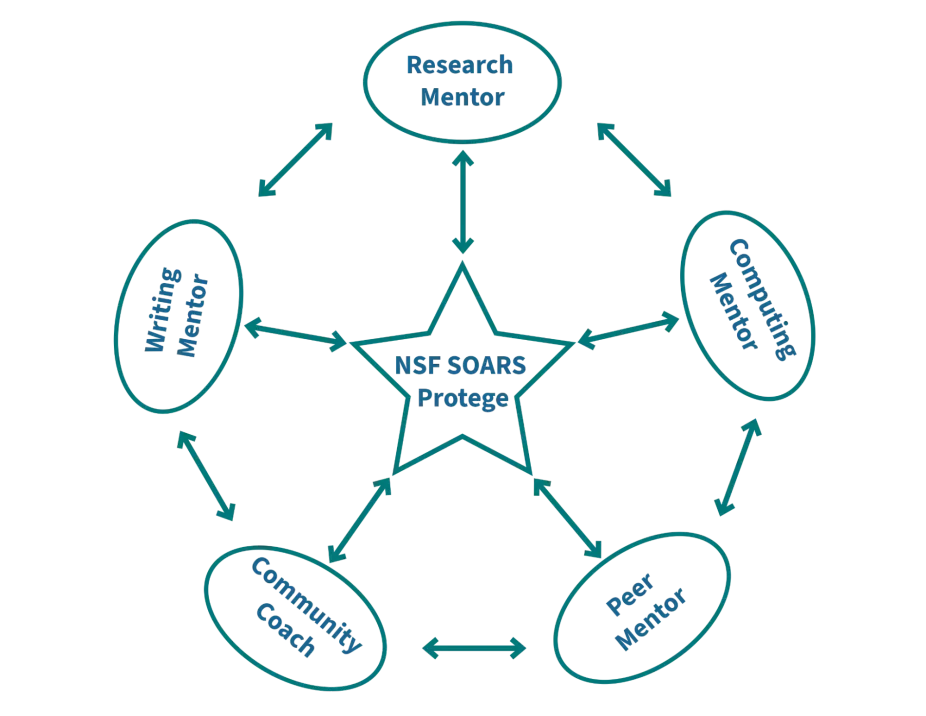
NSF SOARS Mentoring Model adapted from Thomas L. Windham, Amy J. Stevermer, and Richar A. Anthes, 2004: NSF SOARS®: An Overview of the Program and Its First 8 Years. Bull. Amer. Meteor. Soc., 85, 42-47
Mentoring Model
Mentorship is the heart of NSF SOARS.
The NSF SOARS mentoring model was designed by inaugural director Dr. Thomas Windham to provide each Protege with individualized attention and multiple perspectives on their development (Windham et al. 2004). Today, this multi-layered approach continues to connect Proteges with a team of mentors who offer complementary expertise, guidance, and support.
- First-Year Proteges receive up to five mentors: Research, Writing, Computing, Community, and Peer.
- Returning Proteges receive up to three mentors: Research, Writing, and Computing.
Previous mentors frequently maintain connections with Proteges throughout their remaining time in NSF SOARS and into their professional careers. Mentors help Proteges develop technical skills, navigate professional environments, explore career paths, and offer personal inspiration and encouragement.
The multiple mentors I had were like a safety net—each brought something unique to my development.
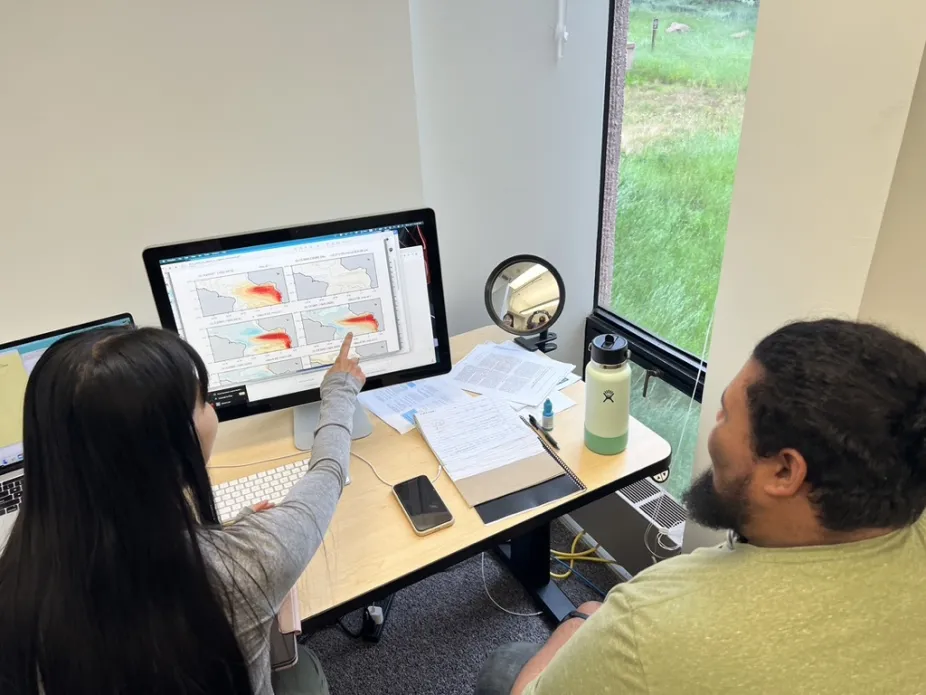
NSF SOARS Protege, Allan Cruz Pérez, with research mentor, Hui Li, reviewing research results.
Mentor Types
Research Mentor(s): Guide Proteges through their research projects. They collaborate with Proteges to draft a research plan, monitor progress, and interpret results as the project evolves. Research mentors typically host the Protege in their lab or office, spending approximately 10 hours per week discussing the project, teaching scientific methods, and assisting with papers and presentations.
Writing Mentor: Offers direct, one-on-one feedback on written deliverables, oral presentations, and scientific posters. Writing mentors spend about 2 hours per week with their Protege and supplement the weekly scientific communications workshop. A Scientific Communication and Writing Instructor is also available for additional guidance.
Computing Mentor: Supports the Protege in acquiring and applying software or technical skills needed to achieve research goals. Mentoring includes one-on-one tutoring, recommending tools, and troubleshooting code. A Computation and Data Science Instructor is also available for additional guidance.
Community Coach: Helps first-year Proteges navigate new environments, define professional or personal challenges, and implement actionable solutions. Representing the broader Earth system science community, coaches meet with their Protege about once a week for holistic check-ins.
Peer Mentor(s): Experienced returning Proteges who offer advice, encouragement, and guidance to help first-year Proteges integrate into the NSF SOARS community.
NSF SOARS isn’t just a mentorship program—it’s a web of support. You’re connected to people who guide you, lift you up, and help you find your way, even long after you’ve left the program.
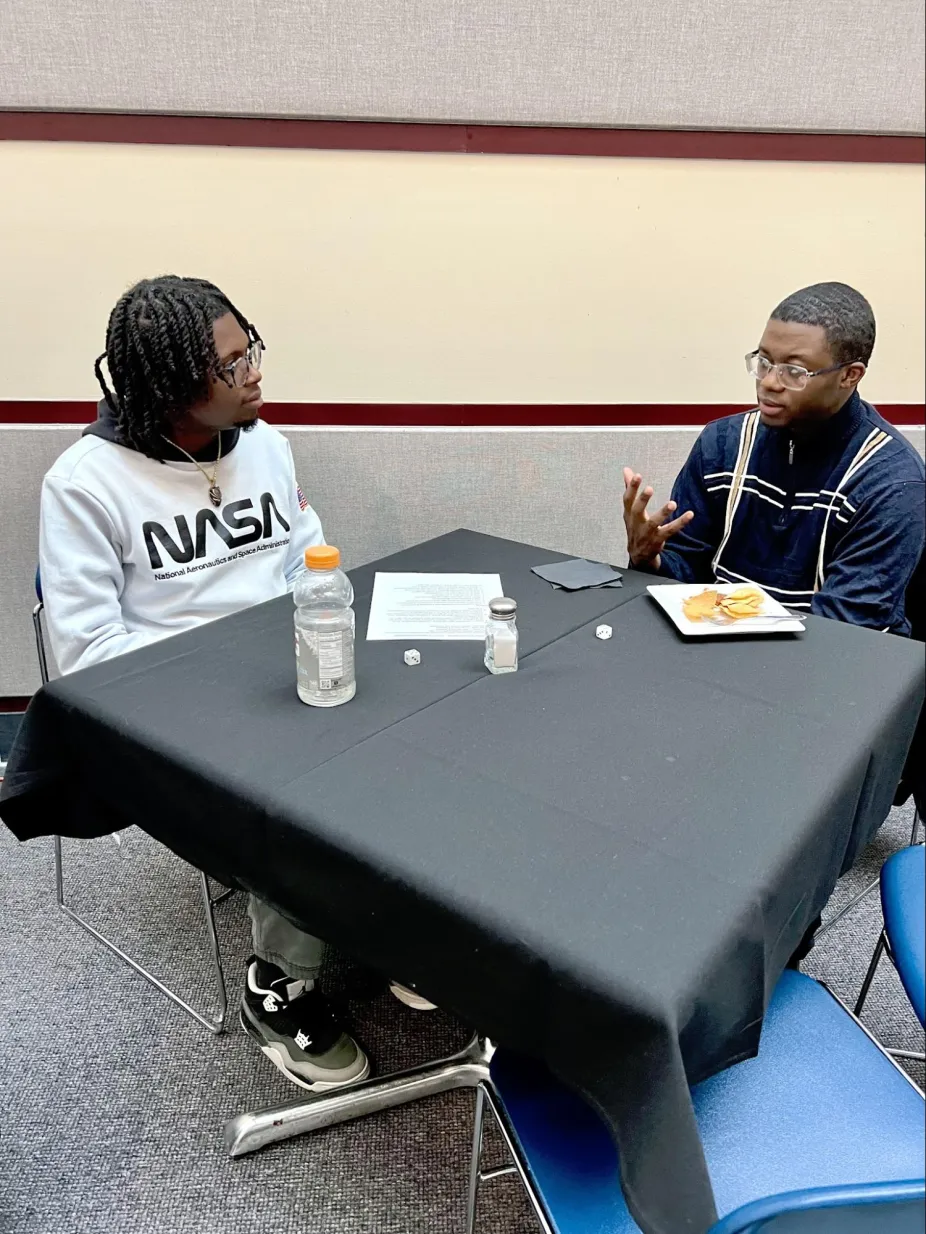
NSF SOARS Protege, Preston Jackson, with community coach, Maurice Wilson, at the annual NSF SOARS Mentor Networking Event.
Matching Process
When applying to NSF SOARS, prospective Proteges select their top three research interests. Concurrently, the mentor applications open for UCAR, UCP, NSF NCAR, and partner organizations, where prospective mentors select their desired role and submit research project proposals.
Once the cohort is selected, the NSF SOARS Steering Committee and program team match each first-year Protege with a proposed project that is as closely aligned with their stated research interests as possible. Returning Proteges gain full agency to select their own research projects and mentors in subsequent years. The NSF SOARS program team remains available to support both Proteges and mentors throughout the matching process and summer term.
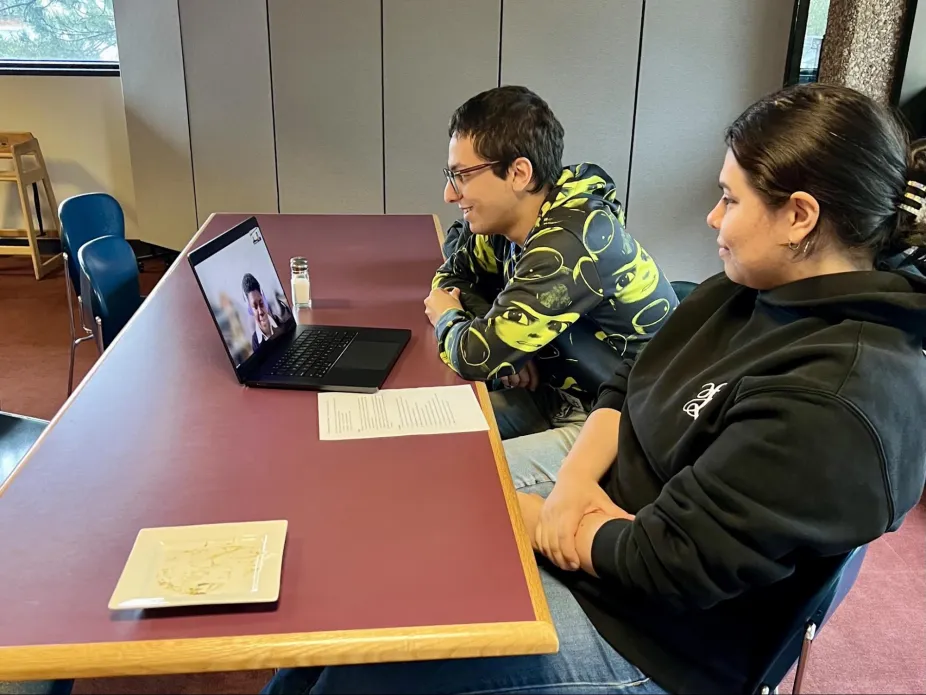
NSF SOARS Protege, Aymon Elyoussoufi, meeting with writing mentor, Carlina Bieri, and research mentor and NSF SOARS Alumna, Brittany Welch.
Expectations
Protege Expectations
- Co-create a summer work plan and take ownership in leading mentor team meetings.
- Seek and offer feedback openly; communicate proactively when struggling.
- Take space and make space — share your perspective while leaving room for others.
- Communicate needs directly and engage in active listening.
- Hold yourself accountable while extending yourself grace.
Mentor Expectations
- Utilize holistic mentoring frameworks to support student development.
- Establish clear communication protocols, expectations, and meeting frequency early.
- Co-manage the mentor team alongside your Protege.
- Help set SMART goals for the summer research project.
- Facilitate professional and personal growth during the summer program and beyond.
The support I received in NSF SOARS wasn’t just about getting through the program—it was about setting me up for the long run. I’ve stayed in touch with my mentors and peers, and now I find myself mentoring others in the same way."
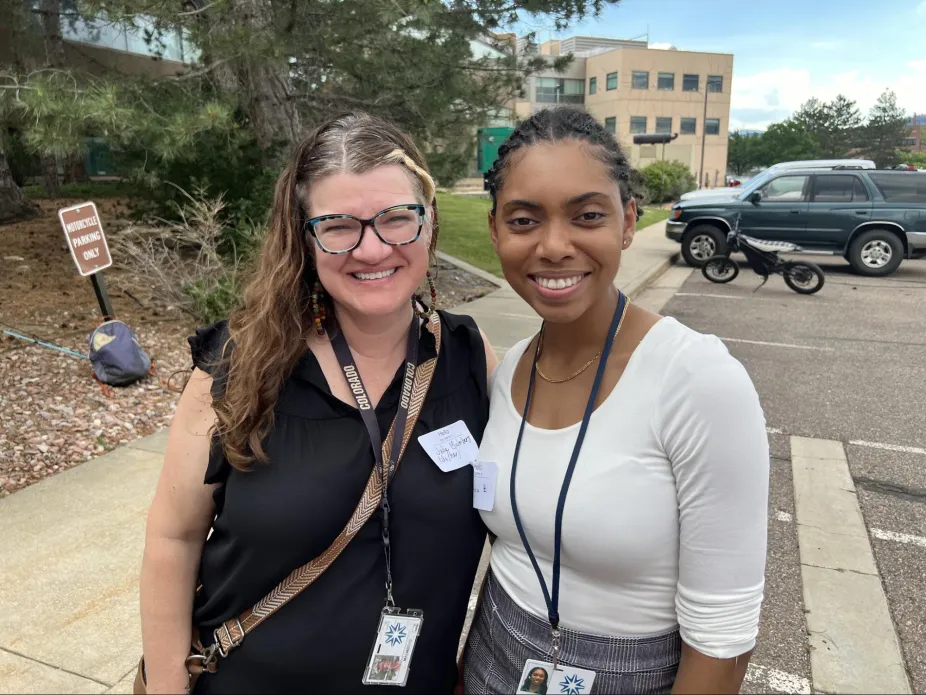
NSF SOARS Protege, Deztynee Bryan, and community coach, Julie Malmberg, at the annual NSF NCAR, UCAR, and UCP Sweet Treat Social.
Become a Mentor
If you are an NSF NCAR, UCAR, or partner staff member interested in supporting the next generation of scientists, we invite you to join our mentor network. Please contact soars@ucar.edu to request the current mentor volunteer form. To learn more about NSF SOARS partnership opportunities see our Partner with Us page.